Squint Assessment
Evaluation of eye alignment in children and adults. Alignment assessment by qualified optometry professionals.
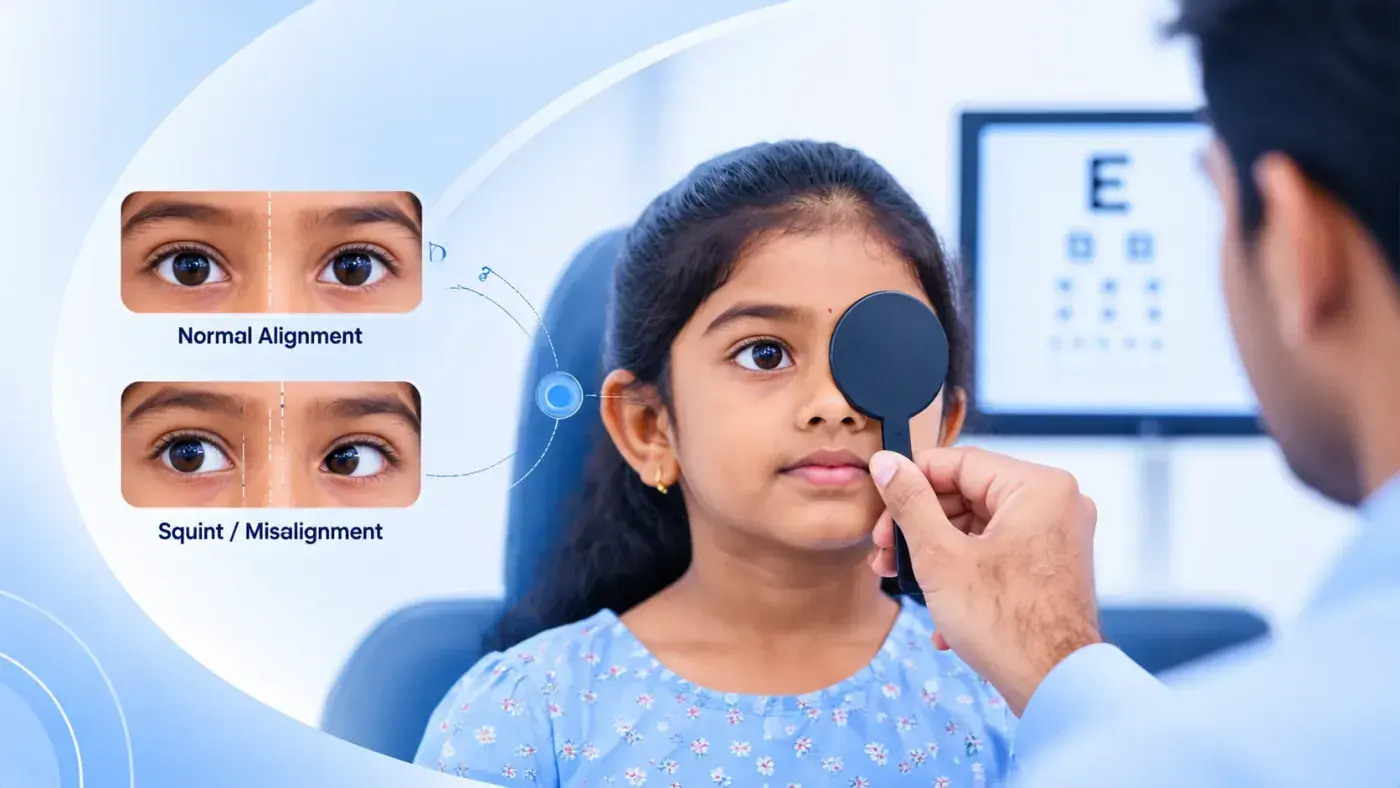
Alignment matters most in childhood.
A squint is a misalignment of the eyes. In children it can affect the development of vision, which is why early assessment matters.
Where glasses, prism lenses or vision therapy can help, these are arranged here. Other cases are referred for a specialist opinion.
Your examination, step by step.
- 01HistoryIncluding the age of onset.
- 02Vision & refractionPower measured in both eyes.
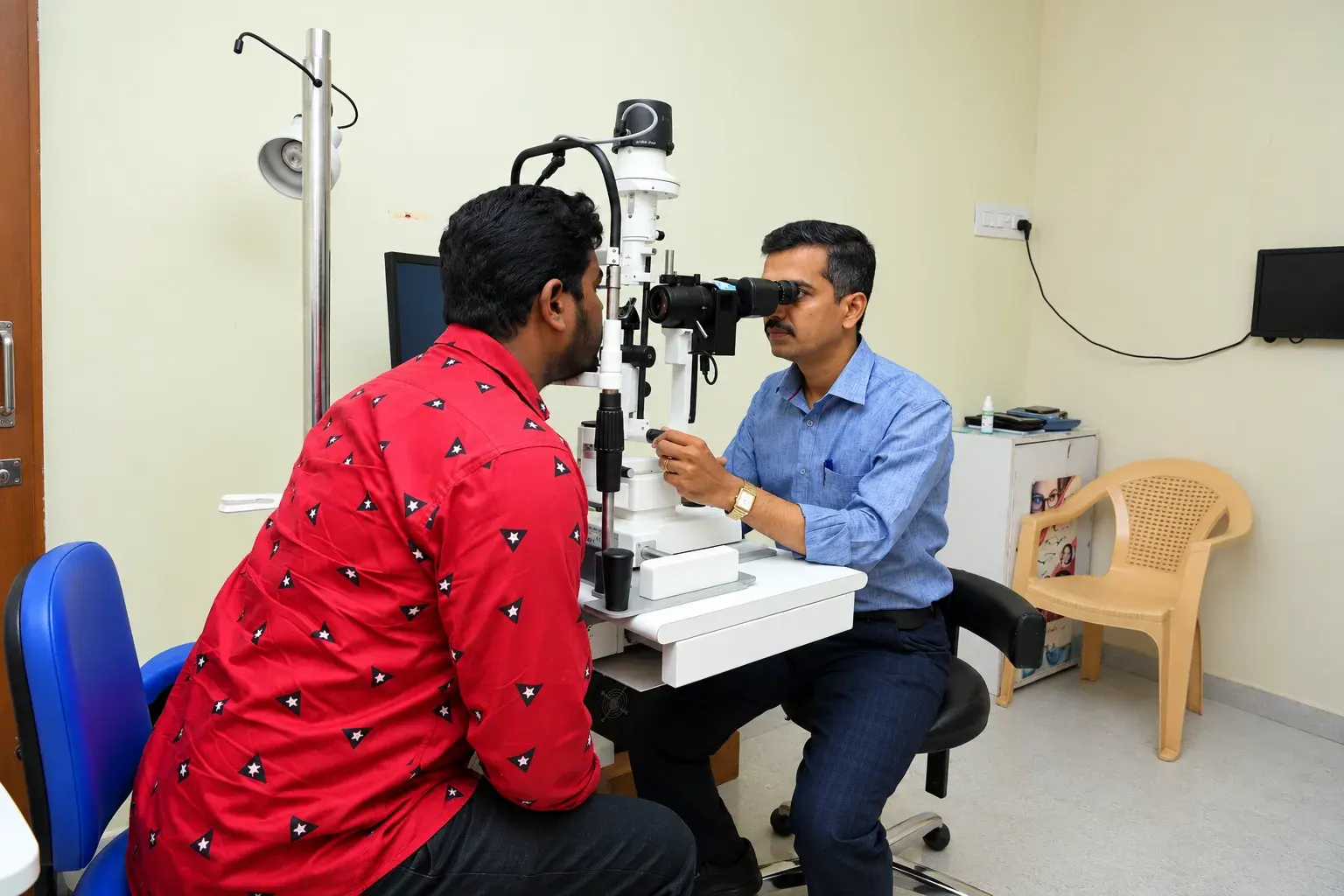
- 03Slit lamp evaluationFront of the eye examined under magnification.
- 04BSV evaluationBinocular vision, convergence, fusion and stereopsis tested.
- 05Squint assessmentCover test, prism measurement and eye movements assessed.
- 06PlanGlasses, prism, therapy or referral.
- 07CounsellingConsultation with eye doctor if necessary.
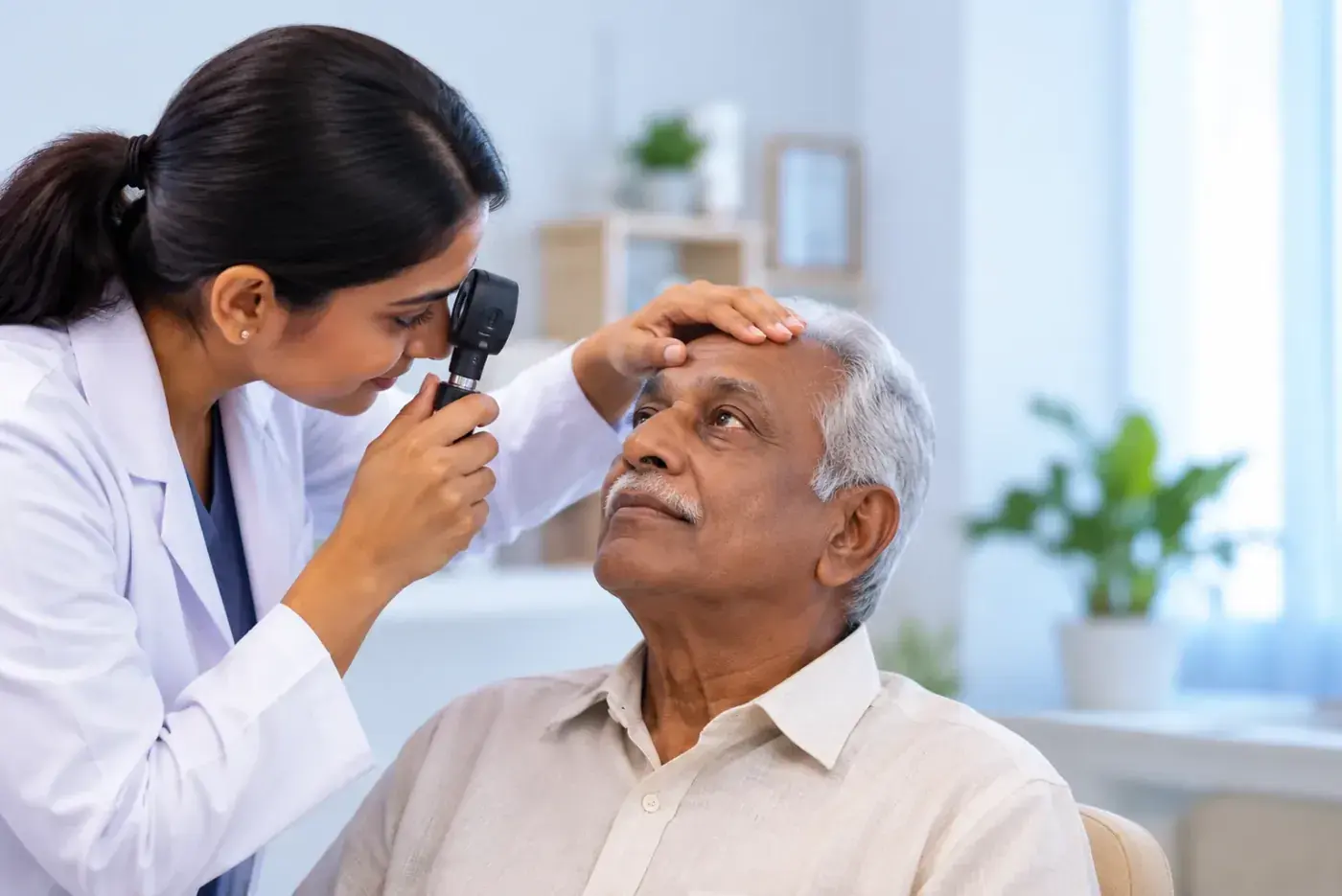
Eye care, wherever you are.
We visit elderly people and persons with disabilities at home to carry out eye examinations. Call or message us to arrange a visit, or see our Geriatric Eye Care service.
Arrange a home visitFrequently asked questions
Any age. If you notice an eye turning in, out, up or down, or your child tilts the head to see, get it checked promptly instead of waiting for school age.
In some cases, yes. Glasses can reduce certain types of squint, especially when long-sightedness is the cause. The optometrist will tell you what is likely to help.
Yes, sometimes after illness or injury, or from long-standing eye problems. Double vision or a newly turned eye should be assessed without delay.
It can. In children, the brain may start to ignore the image from the turned eye, which can lead to a lazy eye if it is not treated early. That is why assessment should not be delayed.


Noticed a turn in the eye?
Book an appointment for a squint assessment with our optometry team.