Cataract Screening
Assessment of lens clouding and how far it is affecting your sight. Screening here, surgery with our consultant cataract surgeons.
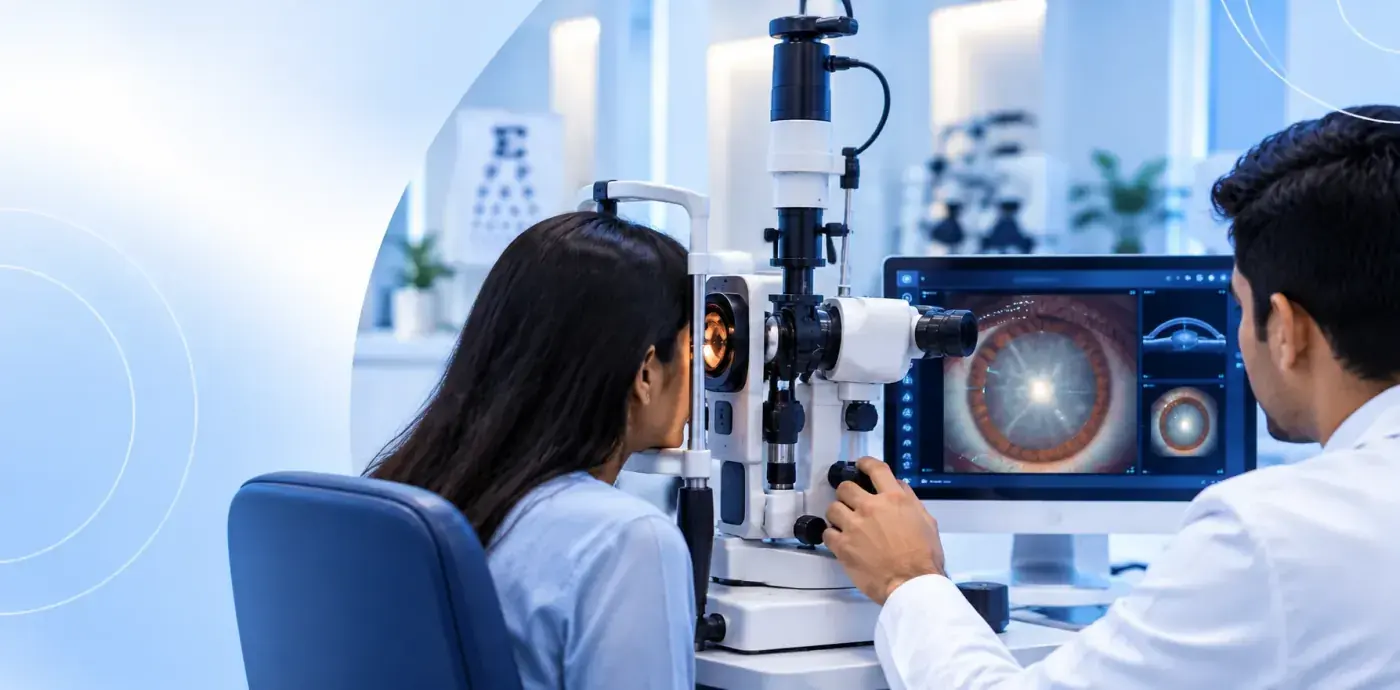
Knowing when surgery is the right step.
A cataract develops gradually, and many people adjust to it without realising how much vision has been lost. Screening establishes the stage of the cataract and whether surgery is the right step.
Where surgery is indicated, you are referred to Dr. M. Raja Kumari, Dr. R. Vijay, or your preferred eye surgeon. You can then return here afterwards for your post-surgery review and spectacles.
Your examination, step by step.
- 01Vision & refractionHow much sight the cataract is costing.
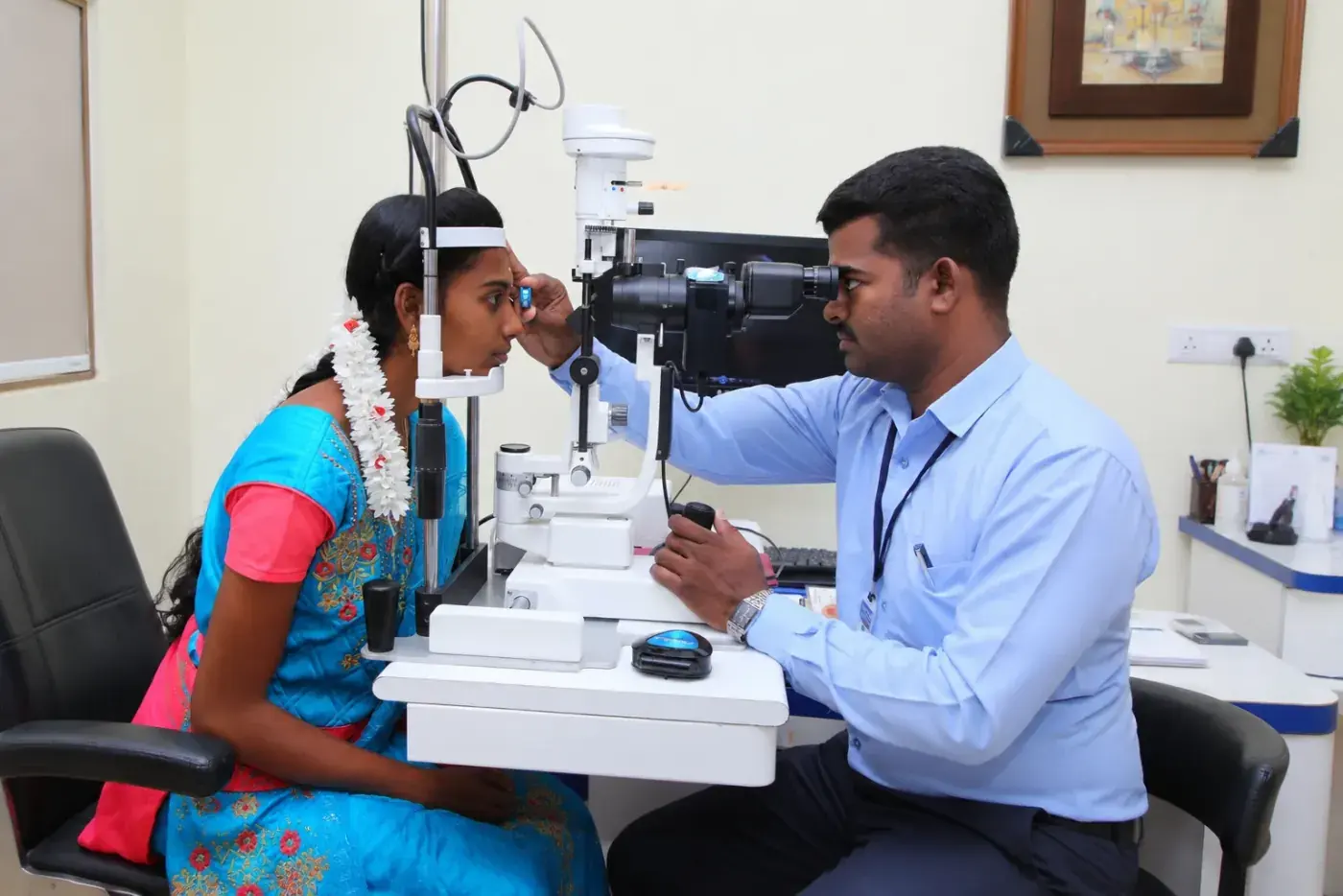
- 02Slit lamp evaluationExamination of the lens itself.
- 03IOP checkEye pressure measured.
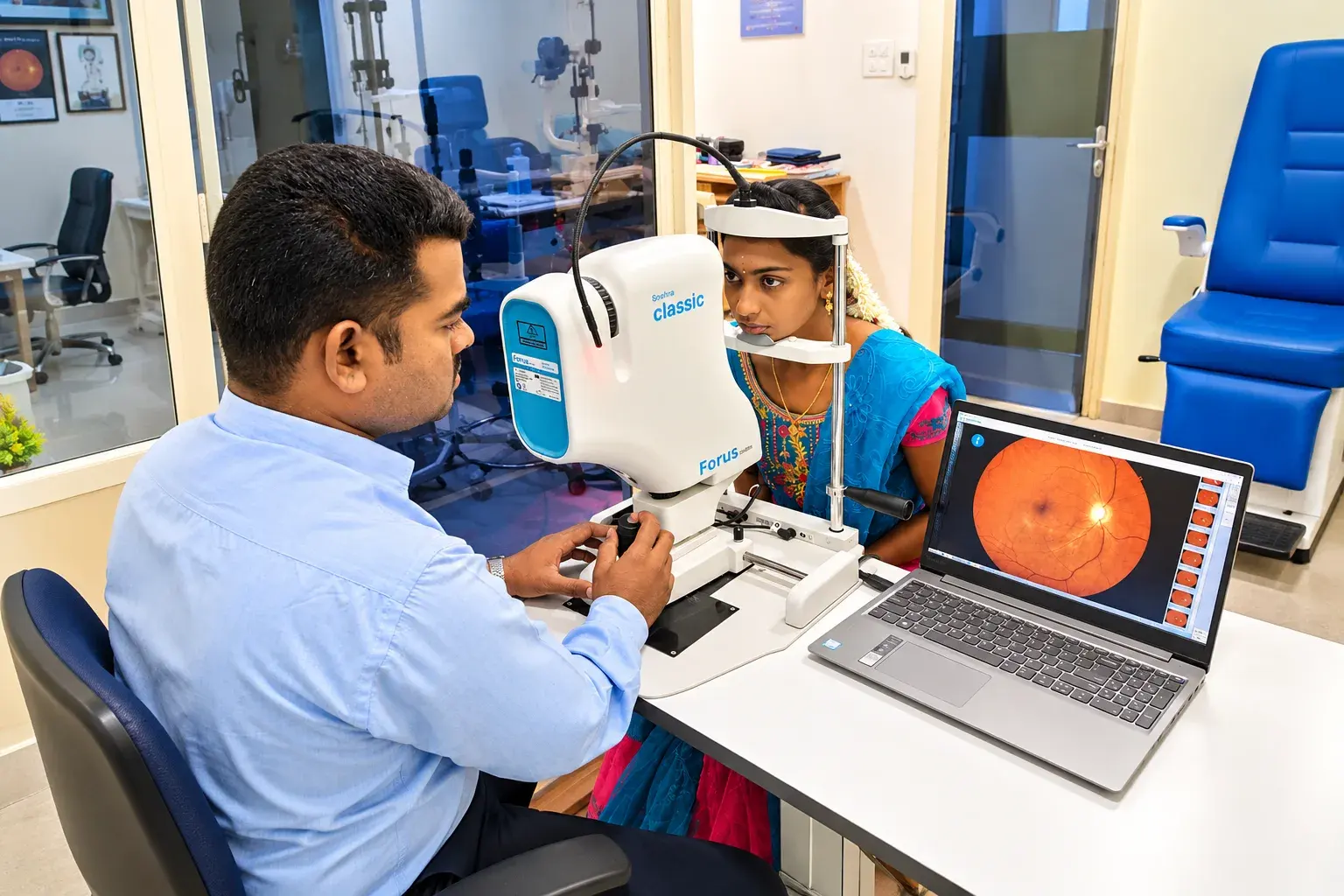
- 04Fundus examinationRetina checked behind the cataract.
- 05CounsellingConsultation with eye doctor if necessary.

Eye care, wherever you are.
We visit elderly people and persons with disabilities at home to carry out eye examinations. Call or message us to arrange a visit, or see our Geriatric Eye Care service.
Arrange a home visitFrequently asked questions
Blurred or cloudy vision, glare from lights at night, colours looking faded, and needing frequent changes to your glasses. These can also be caused by other conditions, so an examination is needed to be sure.
No. Early cataracts are monitored, and glasses may help for a while. Surgery is considered when the cataract affects daily activities such as reading, driving or recognising faces.
We provide primary eye care and screening. When surgery is needed we refer you to an eye doctor, and your follow-up care continues here at the clinic.
Age is the main cause, so it cannot always be prevented. Protecting your eyes from strong sunlight, not smoking and keeping diabetes and blood pressure under control can lower the risk or slow its progress.