Computer Vision Syndrome Assessment
For eye strain, headaches and dryness caused by long hours at a screen. Assessment and lens advice by qualified optometry professionals.
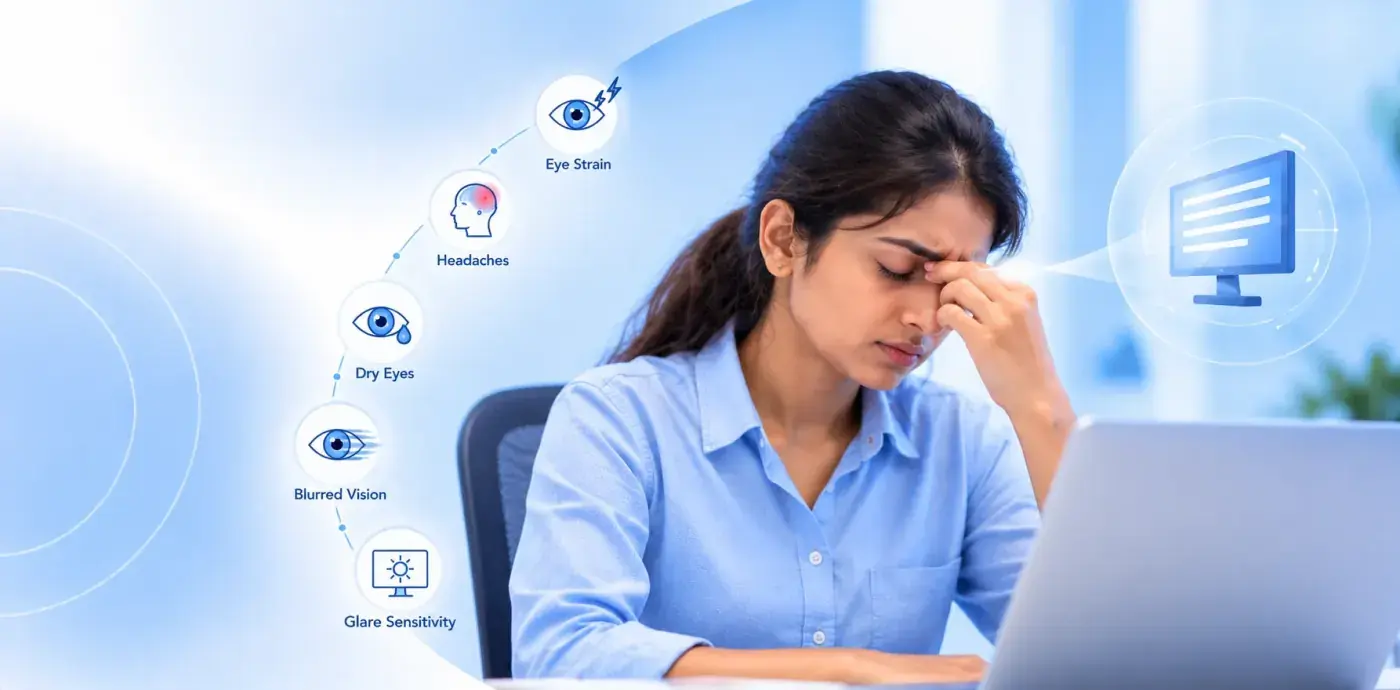
Built for people who work at a screen.
Extended screen work reduces blinking and keeps the eyes focused at one distance, which produces strain, headaches, dryness and blurring by the end of the day.
The assessment looks at focusing, alignment and tear film, and usually results in a lens recommendation along with changes to working habits.
Your examination, step by step.
- 01HistoryScreen hours and working setup.
- 02Vision & refractionPower measured at working distance.
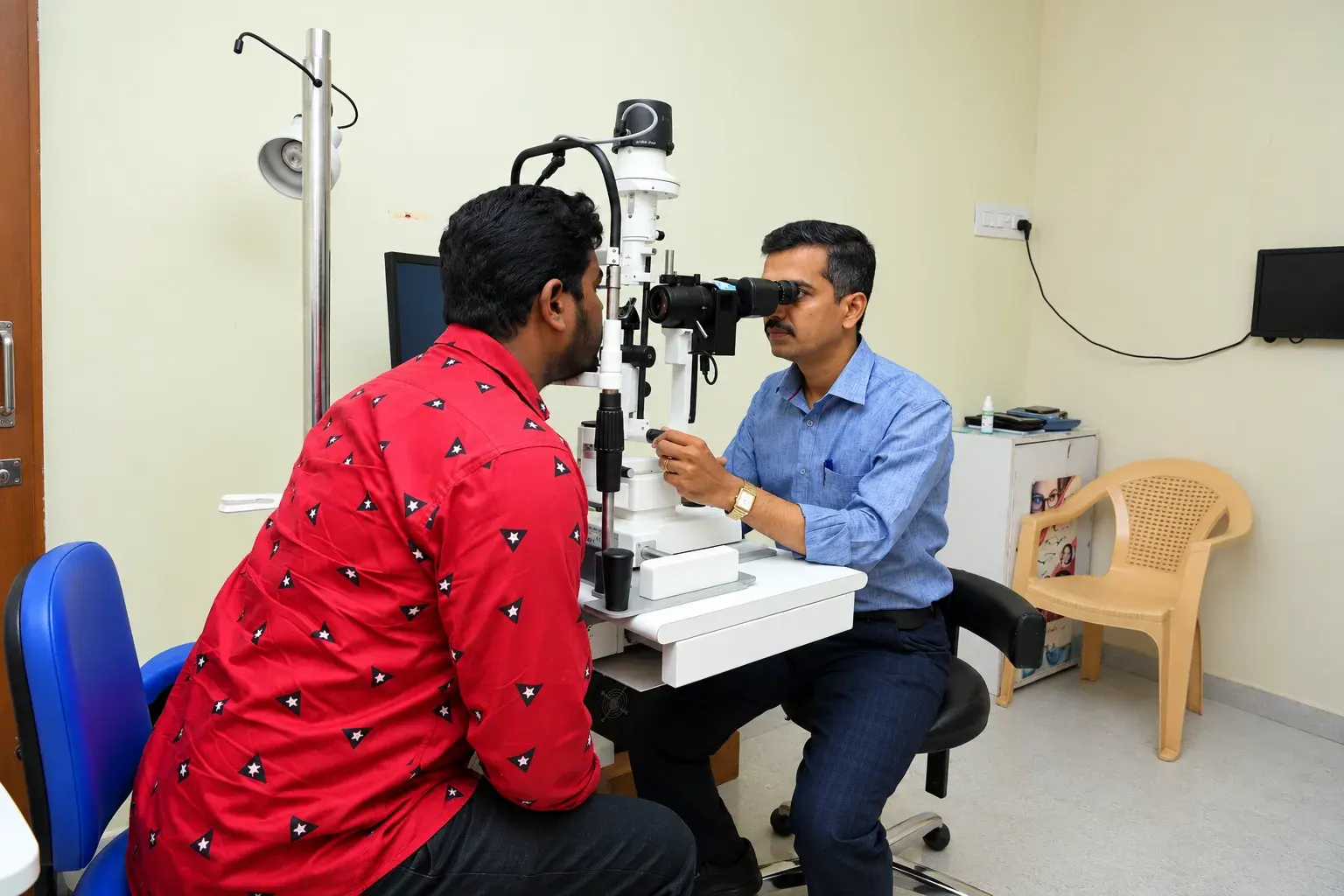
- 03Slit lamp evaluationFront of the eye examined under magnification.
- 04BSV assessmentFocusing, convergence and eye coordination at screen distance tested.
- 05Tear film checkDryness assessed.
- 06RecommendationLens advice and workplace changes.
- 07CounsellingConsultation with eye doctor if necessary. Therapy advised where needed.
When should you have this assessment?

Eye care, wherever you are.
We visit elderly people and persons with disabilities at home to carry out eye examinations. Call or message us to arrange a visit, or see our Geriatric Eye Care service.
Arrange a home visitFrequently asked questions
They can reduce glare and may help comfort for some people, but the most important steps are the right prescription, regular breaks and good lighting. The optometrist will advise what suits you.
Every 20 minutes, look at something about 20 feet (6 metres) away for at least 20 seconds. It helps relax the focusing muscles of the eye.
Yes. Children with headaches, squinting or rubbing their eyes during screen or homework time should have their vision checked.
Short, frequent breaks work best. Look away from the screen every 20 minutes or so, blink fully and keep the screen slightly below eye level. Persistent symptoms should be checked.

Eyes tired by the end of the day?
Walk in for a computer vision syndrome assessment.